The bidder is an agent, the buyer is a company, and the owner is somewhere behind a trust.
With ZenooAgents, companies, trusts and the people behind them sit on one structure, each screened, with the gaps shown before the sale.
Art market · Auction houses and dealers
Buyers and consignors checked on one case, including the companies, trusts and agents in front of them. Zenoo brings the screening, identity and registry results from your vendors together and suggests where to look. Your compliance team decides, before the sale.
30 minutes. Your data. No slides.
Auction houses, galleries, dealers and art advisers.
A collector, often behind a company, an agent or a trust.
Who is really buying or selling, sanctions, and records of each check.
Sound familiar?
The bidder is an agent, the buyer is a company, and the owner is somewhere behind a trust.
The sale date does not move, so checks get finished in a rush.
Our clients expect discretion. Asking them for the same document twice is not an option.
Consignors, buyers and private sales each have their own spreadsheet.
One case, start to finish
Follow one buyer through Zenoo, from the moment their agent registers to bid to the moment your team clears them for the sale.
Nothing is cleared or added on its own.
Product screens show fictional data.
Watch it work · 0:50
Where this fits
Your screening, ID and registry providers send their results to the buyer's case, the companies and trusts behind them included. Anything that needs your compliance team goes to the Inbox. Pick providers from the Marketplace, or bring your own.
Your checksFrom the Marketplace
My inbox0 done
Zenoo suggests. You decide.
What the rules ask
| What the rules ask | Where it lives in Zenoo |
|---|---|
| UK MLR 2017, regulations 14 and 27Apply customer due diligence to buyers and sellers when a sale, or a series of linked sales, is worth 10,000 euros or more. | Buyers and consignors are cases with the same checks, so a linked series of purchases is reviewed on one record. |
| UK MLR 2017, regulation 28Identify the beneficial owners of a company or trust and understand who controls it. | Companies, trusts, agents and the people behind them sit on one structure, layer by layer, with unidentified holders shown as gaps. |
| UK MLR 2017, regulation 33Apply enhanced due diligence where the risk is higher, such as complex ownership or a high-risk country. | Extra checks are added to a higher-risk case, and source of wealth evidence is read and filed against the check it proves. |
| UK MLR 2017, regulation 35, and UK sanctionsScreen for sanctions and politically exposed persons, including the people behind a company. | Every party on the structure is screened with the vendors you choose, and every hit is cleared by a person with a reason. |
| UK MLR 2017, regulation 40Keep records of the checks and the reasons for each decision. | Every decision, reason and change is kept in the case history with who made it and when, and nothing can be edited or removed. |
| EU AMLD5, art tradersIn the EU, traders and intermediaries in works of art apply the same checks from the same 10,000 euro threshold. | One case and one record work across salerooms, with data kept in the EU or US region or on a dedicated UK tenant. |
Last reviewed 21 October 2026. Each source links to the official text. A summary to help you compare, not legal advice. Your MLRO sets the policy. Zenoo runs it and keeps the record.
Zenoo AI
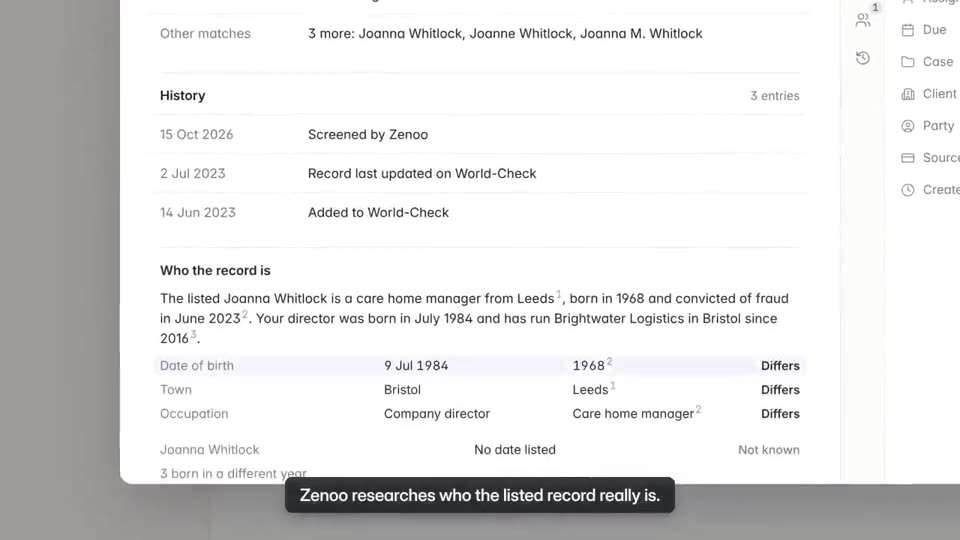
On a buyer's or consignor's case, Zenoo reads the structure, the documents and the screening results, and suggests the next step with its sources. A person makes every call.
Getting live
Send applications in through the API, or onboard customers through Zenoo's own journeys. Keep the data vendors you have, under your contracts, and add others from the Marketplace.
Browse the MarketplaceFour to six weeks to production is typical, depending on your providers and systems. It starts with a demo on a case you bring, then a pilot on real cases.
How buying worksIn the EU or US region, or on a dedicated UK tenant. Encrypted with AES-256 at rest and TLS 1.3 in transit. ISO 27001 certification is in progress.
Trust and securityQuestions
A business that trades in works of art, or acts as an intermediary in their sale or purchase, where the value of a sale or a series of linked sales is 10,000 euros or more. Art market participants must register with HMRC and apply the Money Laundering Regulations. Your MLRO decides how this applies to your business.
Yes. The checks apply to both sides of a sale. In Zenoo, buyers, consignors and private sale clients are all cases with the same checks and the same record.
The agent, the company they act for and the people behind it all go on one structure. Each is screened, and Zenoo flags who is still unidentified before the sale.
Yes. Zenoo runs checks with the providers you already use, under your contracts, and you can add others from the Marketplace.
No. Zenoo suggests the next step with its sources. A person clears every hit and approves every buyer, and both are on the record.
Yes. Documents are requested through the client portal. Zenoo reads each one when it arrives and files it against the check it proves.
Tomorrow, your case
We'll build the structure behind them while you watch.
30 minutes. Your data. No slides.


