
Advanced AI Detection
Detect AI-generated images and audio with Zenoo integrated with AI or Not, adding a synthetic-media check to your verification flows.
At a glance
Overview
Advanced AI Detection overview
AI or Not is a synthetic-media detection service that analyses images and audio to judge whether they were generated or manipulated by AI. In an onboarding context it adds a defence against AI-generated documents, selfies, and voice, which image and document checks alone can miss.
- Company
- AI or Not
- Category
- AI detection
- Strongest in
- Detecting AI-generated images and audio
- Best fit
- Flows exposed to deepfakes and synthetic media
Where it is strongest
Key strengths
What Advanced AI Detection does well.
Synthetic-media detection
Analyses images and audio to flag AI-generated or manipulated content, addressing a fraud vector that traditional document and biometric checks were not built for.
Targets deepfake fraud
As generative tools make fake IDs, selfies, and voice cheaper to produce, a dedicated detection layer helps catch attacks that pass basic authenticity checks.
Focused, layerable check
Does one job well and slots in alongside document and biometric verification rather than replacing them, so it strengthens an existing flow.
Content integrity beyond KYC
Also useful for verifying user-generated content authenticity where AI-generated media is a trust or misinformation risk.
Who it suits
Best for
Where Advanced AI Detection fits, and what to plan for.
Honest notes on the trade-offs, each with a way to cover the gap inside a Zenoo flow.
- Flows exposed to AI-generated documents, selfies, or voice
- High-risk onboarding that wants a dedicated deepfake defence
- Platforms checking user-generated content for synthetic media
- A detection layer, not full verification. It judges whether media is AI-generated, not who the user is. Pair it with identity and document verification, which Zenoo runs in the same flow.
- Detection is an evolving arms race. Generative models and detectors both advance quickly, so no synthetic-media check is perfect. Use its score as one signal in a layered decision rather than a single pass or fail, which Zenoo's orchestration supports.
- Coming soon. This connector is on the Zenoo roadmap rather than generally available today. Confirm timelines before designing a flow that depends on it.
Open the customer's case
What your team sees
The Advanced AI Detection result, beside everything else.
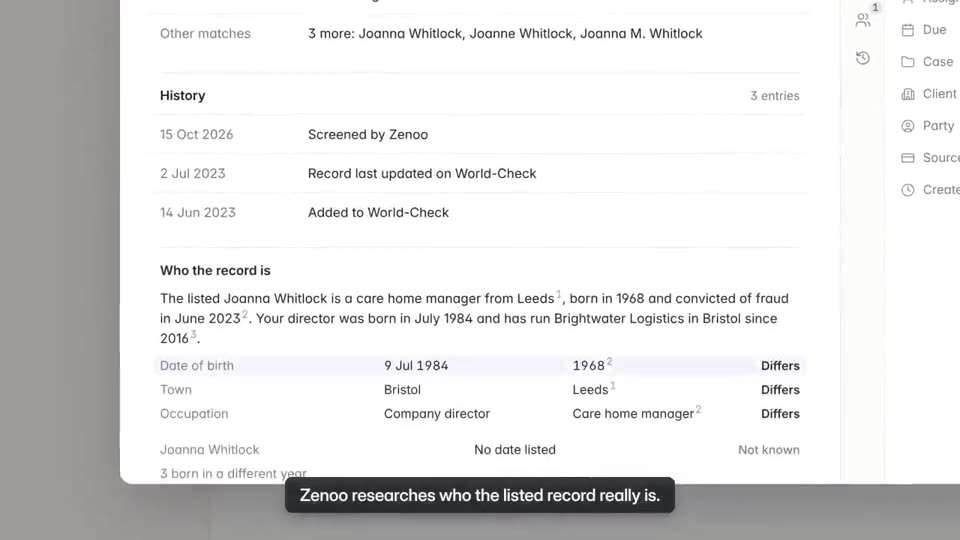
The result sits with screening and review on one case, so nobody checks a second tool to see the whole customer.
What you can build
- Screening onboarding selfies and documents for AI-generated media
- Adding a deepfake defence to a document-and-biometric flow
- Checking user-generated content for synthetic images or audio
About Advanced AI Detection
FAQs
Advanced AI Detection questions.
Can AI or Not replace my document or biometric checks?
No. It detects AI-generated media as an extra layer. Keep identity, document, and biometric verification in the flow, and use the AI-detection score as one signal in the decision.
Is the detection guaranteed to catch every deepfake?
No synthetic-media detector is perfect, since generative models keep evolving. Treat the result as one input in a layered flow, which Zenoo's orchestration is built to support.
Hands it to your team
Verification is the first step. Compliance Hub handles the rest.
Once a customer is verified, screening and review happen in Compliance Hub. A possible PEP match lands in your team inbox with the evidence and the full history beside it. Zenoo suggests, your team decides.
Pairs well with
 Selfie ID VerificationAdd face match and liveness the AI-media check runs alongside.DADocument AuthenticationVerify document authenticity while AI detection screens for generated media.AU
 AU10TIXAdd device attestation and injection defence for high-risk biometric flows.
Alternatives
Tomorrow, your case
Bring us a case that went wrong.
We will run it through Zenoo while you watch: the evidence, the decision, and the record your MLRO would want to defend.
30 minutes. Your data. No slides.